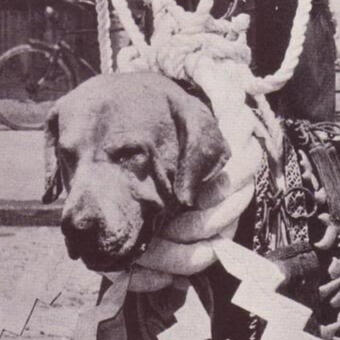
Futubaryu
Tosa Inu Digest
Welcome to my Tosa Inu blog, a space dedicated to celebrating Japan’s powerful yet gentle athlete. Here you’ll find helpful insights on the breed’s history, temperament, care, and training—everything you need to understand and appreciate the remarkable Tosa Inu. Whether you’re an owner, enthusiast, or simply curious, we’re here to share knowledge and inspire responsible companionship.
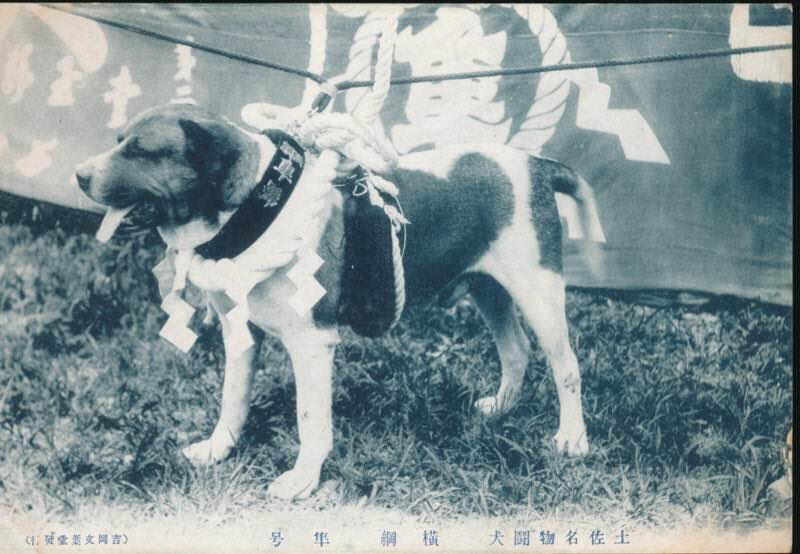
Hayabusa-go
About me
Hello, I am Arielle Kenney. I am an admirer and enthusiast for the breed that is the Tosa. I created this website to put all my information in one place. Hopefully my website can help you learn more about this fabulous breed. Enjoy!
Tosa Inu History
lorem ipsum dolor sit amet, consectetur adipiscing elit, sed do eiusmod tempor incididunt ut labore et dolore magna aliqua. ut enim ad minim veniam, quis.
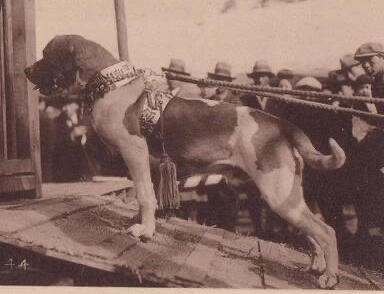
Tsukasa Tenryu-go
lorem ipsum dolor sit amet, consectetur adipiscing elit, sed do eiusmod tempor incididunt ut labore et dolore magna aliqua. ut enim ad minim veniam, quis. lorem ipsum dolor sit amet, consectetur adipiscing elit, sed do eiusmod tempor incididunt ut labore et dolore magna aliqua. ut enim ad minim veniam, quis.lorem ipsum dolor sit amet, consectetur adipiscing elit, sed do eiusmod tempor incididunt ut labore et dolore magna aliqua. ut enim ad minim veniam, quis.
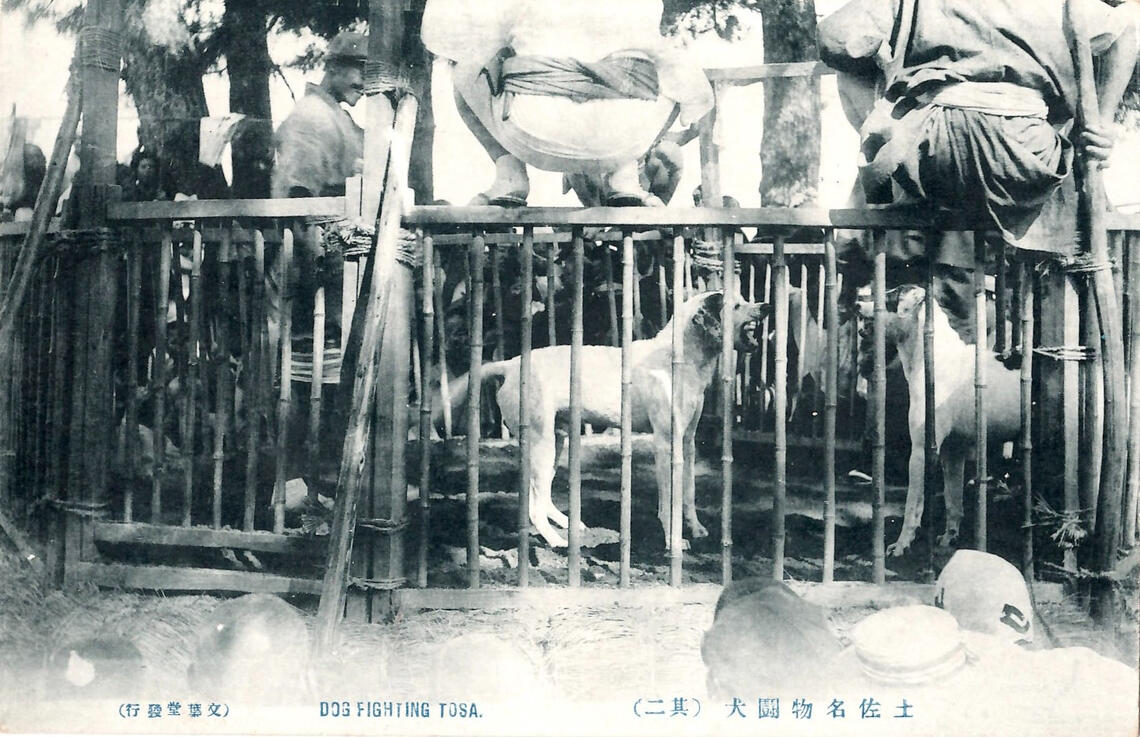
A summary of Tosa wrestling and its culture – Tosa wrestling is a tradition adored by natives of Japan. It is seen as a positive outing for families and foreigners alike. Much like how Kennel Club shows operate, Tournaments have programs comparable to show catalogues where you can keep up with members, dogs, and scoring. Tosa wrestling is a silent job, the dogs lose if they make a noise, and if the dog wants to leave or is showing signs of no longer wanting to wrestle the match is over. It is considered as wrestling and sumo-like because unlike American Pit Bull Terriers, they are using dominance instead of the want to kill. The matches don’t nearly last as long either.
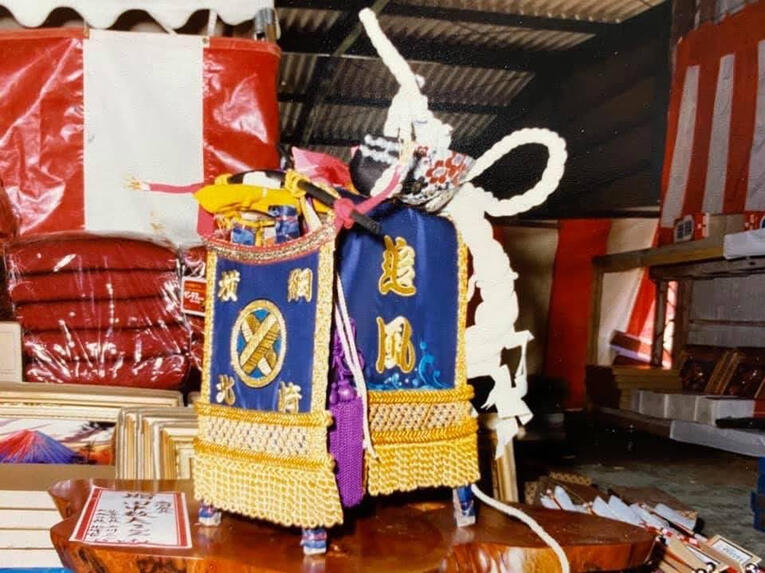
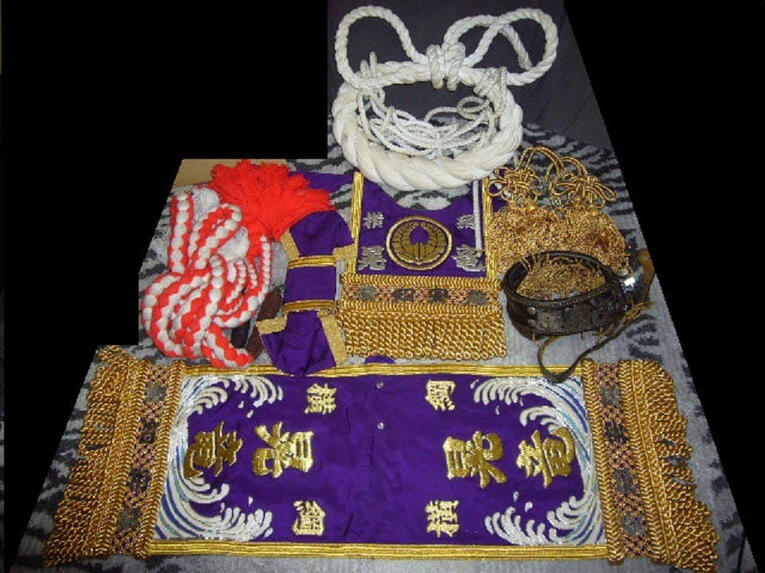
Tosa dog fighting is heavily influenced by Professional Sumo wrestling and their Makuuchi [幕内] divisions. Now forward, Tosa dog fighting will be referred to as Tosa wrestling. Tosa wrestling is highly respected and treated very differently than westernized fighting. That doesn’t mean there aren’t fallacies in the industry, but it is more culturally based than what pit fighting would be in the states. Let’s start off with the classification in the Tosa wrestling divisions.
| Title | Meaning | Elaboration |
|---|---|---|
| Gaifu Taisho | Best Fighting Technique | Judges decide which dog would have the best fighting technique of all dogs of a tournament. |
| Meiken Yokozuna | Warrior Grand Champion | He must have 3 fights in the rank of Senshuken, not worse than 2 wins and 1 draw. |
| Senshuken | National Grand Champion | Can be won only once in a dog's life, must have a higher rank than a Yokozuna and be elected by the judges. As soon as a dog goes for the title Senshuken, it qualifies for a challenge for the title Meiken Yokozuna. A dog is allowed to fight once a day (tournaments lasting 2 days), per year it is only allowed to fight 2 tournaments, maximum 4 fights a year. |
| Yushoken | Tournament Champion | No matter which weight class, the dog coming next to the 30 minute mark and winning his match. |
| Yokozuna [横綱] | Grand Champion | Highest title of San'yaku rank. |
| Ozeki [大関] | Champion/Pre Championship | Second highest San'Yaku rank. |
| Sekiwake [関脇] | Third ranking | Most fighting experience of the lower San'Yaku. |
| Komusubi [小結] | Fourth ranking | Lowest of the San'yaku rank with fighting experience. |
| Maegashira [前頭] | Fifth ranking | Amateur/Beginner title of Sekitori rank. |
| Juryo [十両] | Sixth rank | Lowest title of the Sekitori. |
| Makushita [幕下] | Seventh rank | Lowest overall ranking in Tosa wrestling. |
| Weight Class | Weight |
|---|---|
| Super Heavyweight | (超大型, Chō Ōgata) 54+ KG |
| Heavyweight | (大型, Ōgata) 46-53 KG |
| Middleweight | (中型, Chūgata) 41-45 KG |
| Lightweight | (小型, Kogata) 33-40 KG |
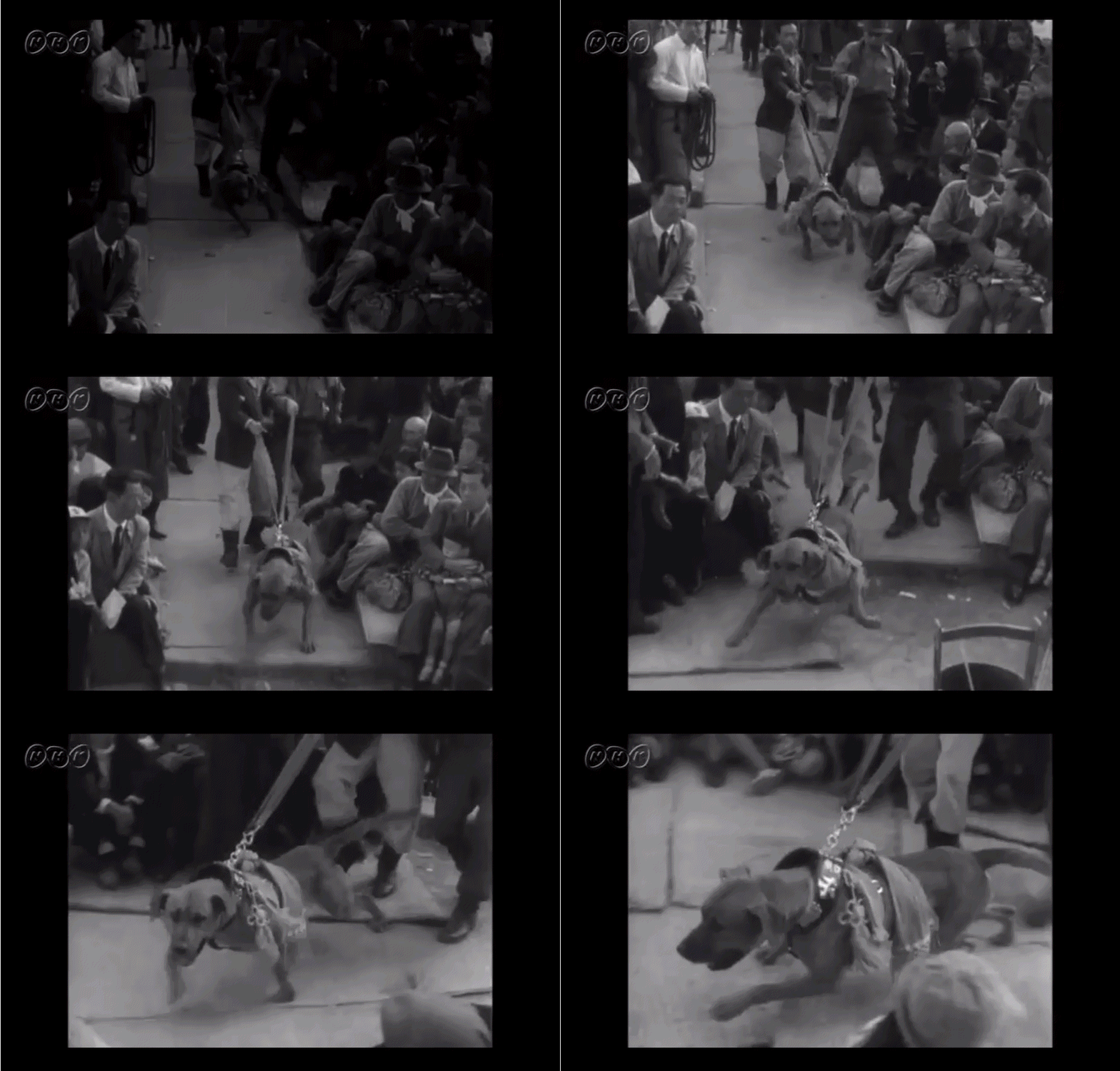
Tosa wrestling rules.
Grace period – The grace period allows only auction voices for fighting dogs, but not other voices, running, metamorphosis, and guesswork. You can see the level of the fighting dog in the grace time, and if you are a famous dog, you will fight silently regardless of the grace time.
| Tournament name | Hiramaku [平幕] | San’Yaku [三役] |
|---|---|---|
| Prefectural tournament | 2 minutes | 40 minutes |
| National convention | 40 seconds | 20 seconds |
| Championships | 10 seconds nationwide | Prefectural regulations |
Tosa Inu Media
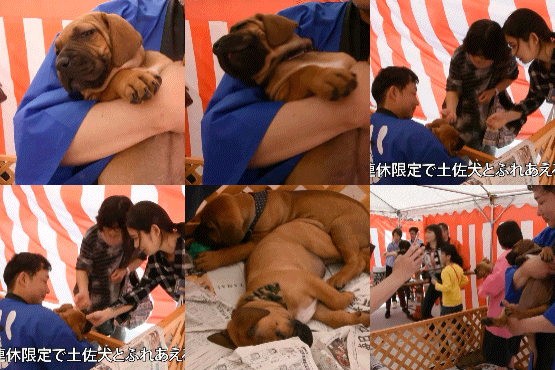

Tosa Inu in popular media
On this page, I will be showing the collective of Tosa in the media. This media is physical, digital, cultural, and all. The Tosa is symbolic and can be found in a lot of spaces that may surprise you.Click the picture to open the page.
Historical Tosa
This exhibit features a curated selection of dog images, ranging from early historical photos to modern photos.Click the picture to open the page.


Tosa Inu colors
Here, I will go over the rainbow of colors this breed comes in. Many people are shocked to find out that Tosa comes in more colors than red.Click the picture to open the page.
Articles
I put a library of articles I have scanned and found throughout my research here. You will find rare and important information about the breed here.Click the picture to open the page.

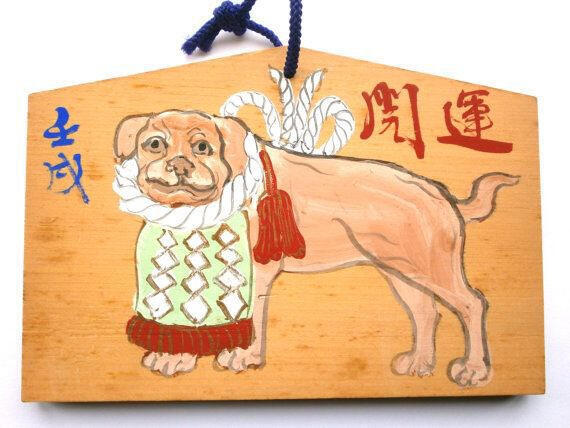
Tosa Ema—絵馬, small wooden plaques, common to Japan, in which Shinto and Buddhist worshippers write prayers or wishes. Ema are left hanging up at the shrine, where the kami (spirits or gods) are believed to receive them. Typically 15 cm (5.9 in) wide.
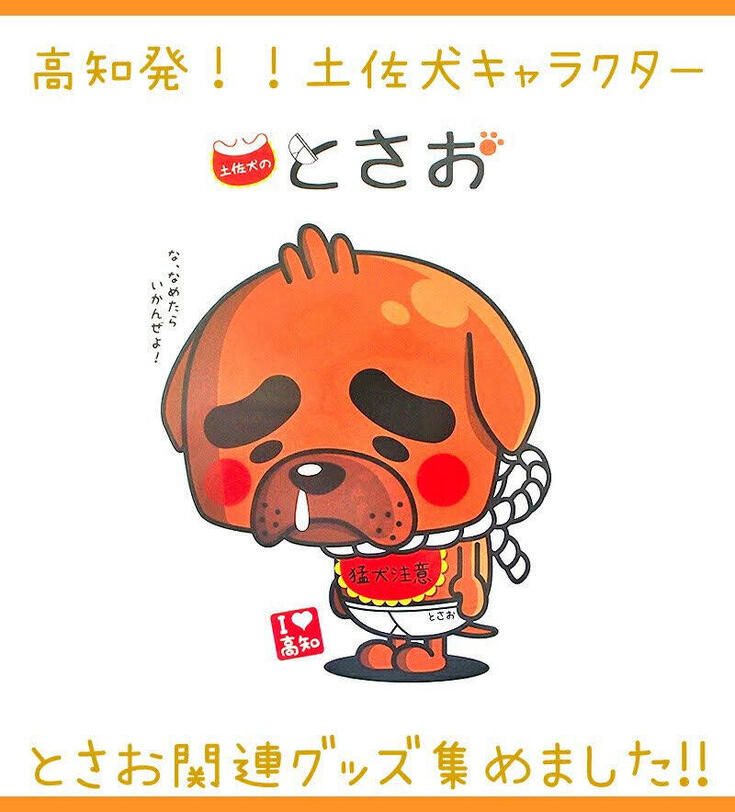
Tosao and his family. Kochi prefecture characters are commonly drawn with other similar characters: Tosanosuke, Tosako, and Yuzutaro.
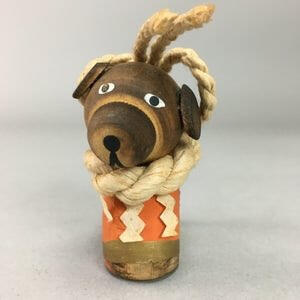
Tosa Kokeshi—こけし—are simple wooden Japanese dolls with no arms or legs that have been crafted for more than 150 years as toys for children. Originally from the northeastern region (Tōhoku-chihō) of Japan, they are handmade from wood.
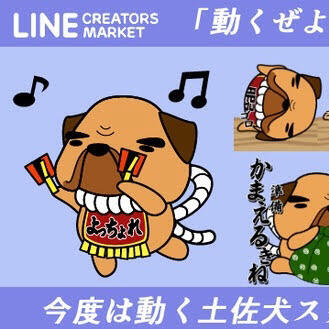
Popular messaging app LINE, used mostly in East Asian countries, had a sticker packet featuring a Tosa Inu named Ben (the artist/creator's name is Kame).
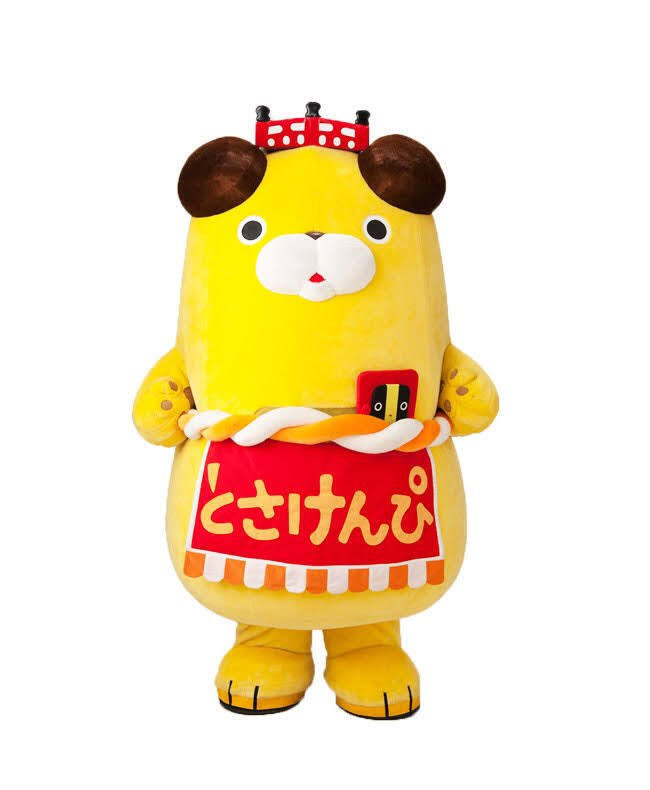
Tosakenpi (とさけんぴ), a Tosa dog with a bridge on its head, is the mascot of Harimaya Bridge in Kochi, Japan. He winks a lot.
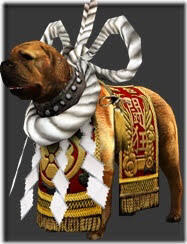
Tosa Inu were also featured in the survival action game Tokyo Jungle, published by Sony and released for PlayStation 3.
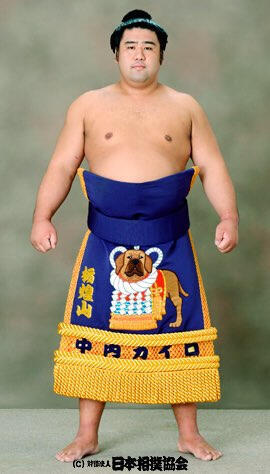
Professional Sumo Wrestler Tochiōzan Yūichirō sports a Keshō-Mawashi [廻し, The thick-waisted loincloth worn for sumo training and competition.] featuring a Tosa Inu dressed up as a Yokozuna.
Tosa Inu are featured in a popular Japanese Cartoon “Ginga Densetsu Weed” made by Yoshihiro Takahashi, that features fairly accurate representation of Tosa Inu “Musashi”, “Tsuna Arashi”, “Benizakura”, and “Moss”
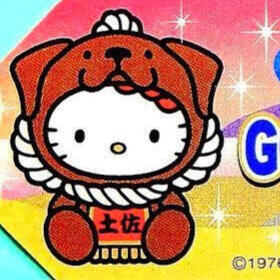
Sanrio Hello Kitty Tosa characters, presumably produced in collaboration with the Kochi Tosa Museum.
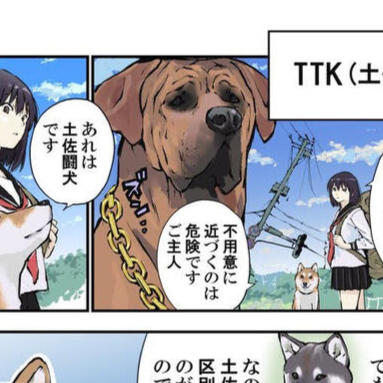
Japanese Twitter artist named @K5dbZRmjNe77i5r featured Tosa Inus in one of their original content comics, Sekai no Owari no Shiba Inu.
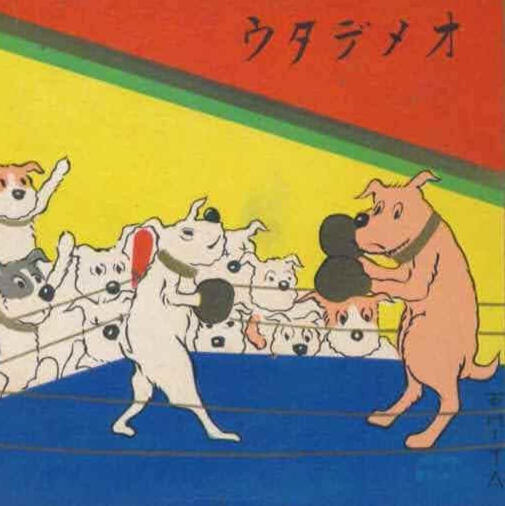
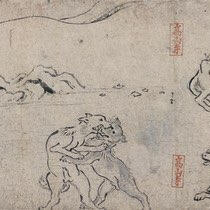
Japanese depiction of dog fighting.
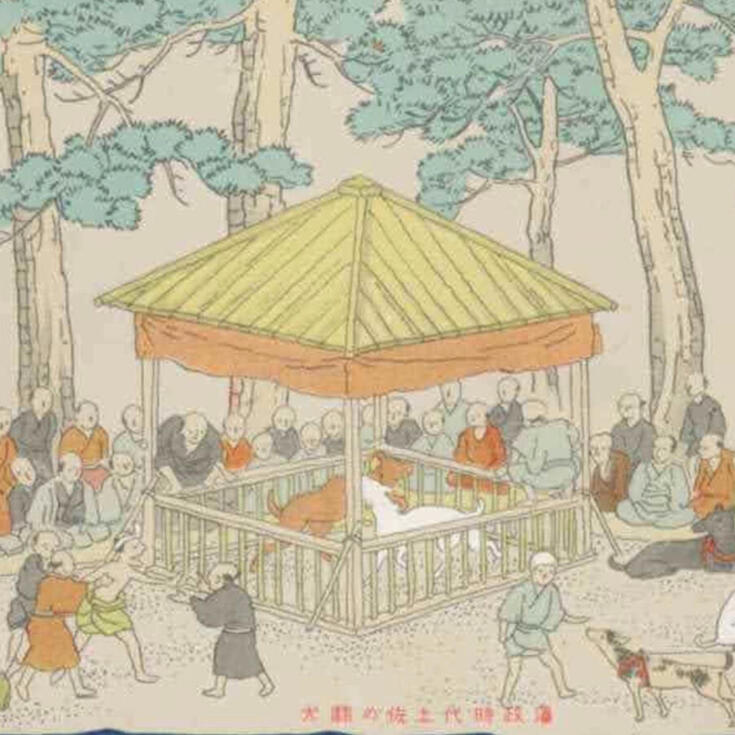
Japanese depiction of dog fighting.
修復後の鳥獣戯画 - Choju-Jingai or known as Choju-Jinbutsu-Giga, the National Treasure depicting dogfighting.
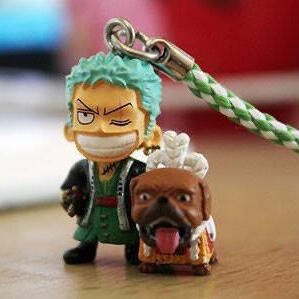
Popular one-pi character Zoro and Tosa Inu for a Kochi limited collaboration.
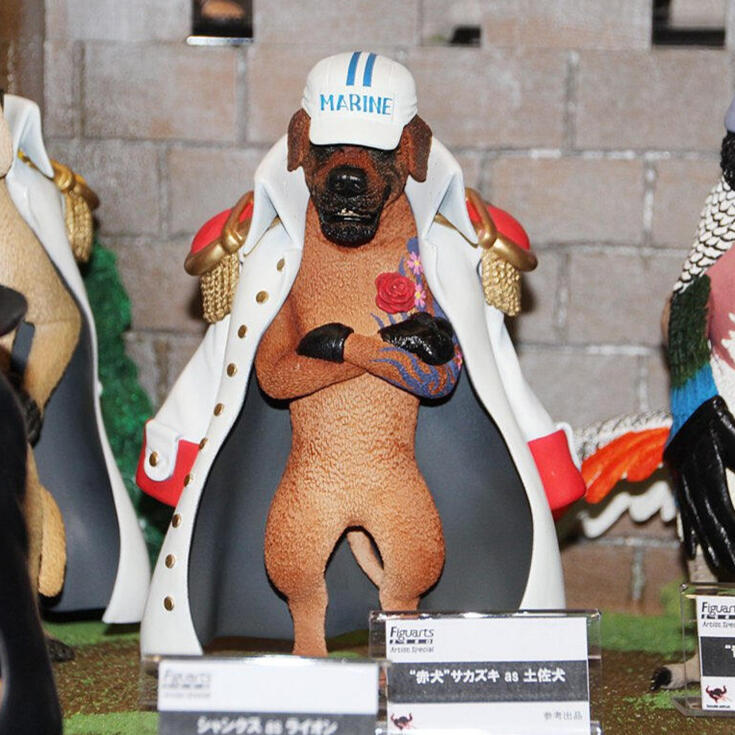
“I present Zoro as Tosa” Artist special release from Zero, limited animal One Piece character.
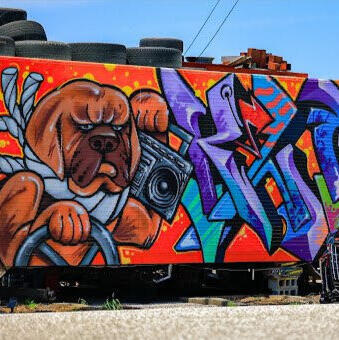
Tosa graffiti shipping container in Kochi Japan.
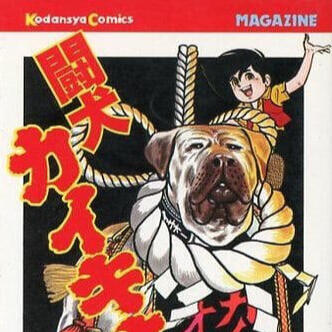
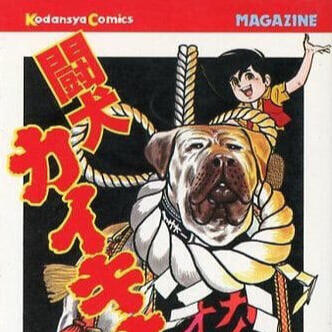
Eiji Kimura Fighting Dog Kaikio Manga features a child going on Journeys with his Tosa Inu with accurate representation of Tosa fighting and Yokozuna, released by Kodansha Ltd the biggest Manga publishing company.
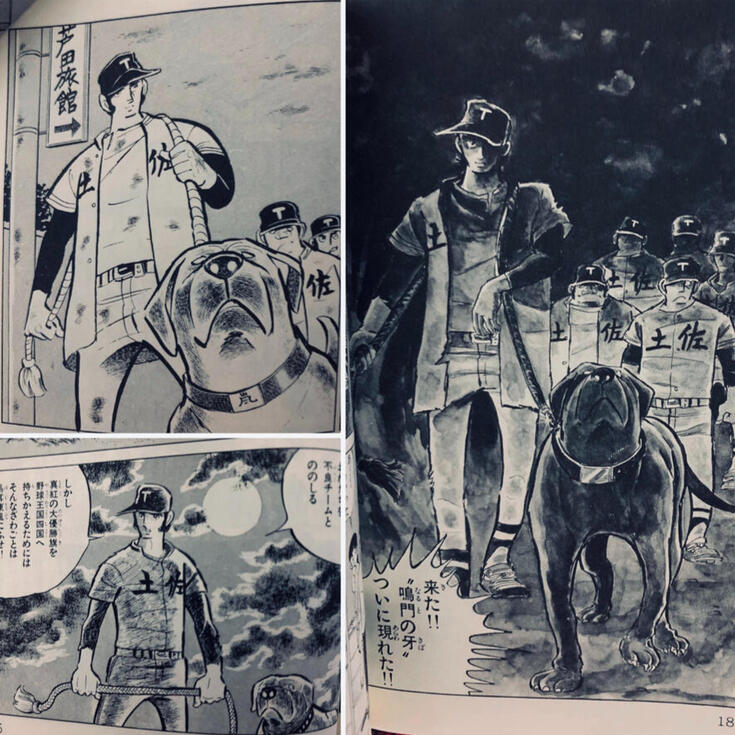
Baseball manga Dokaben featuring Arashi the pet Tosa, illustrated by Shinji Mizushima.
Various Tosa Inu on Trucks assumedly for Tournament exposure.
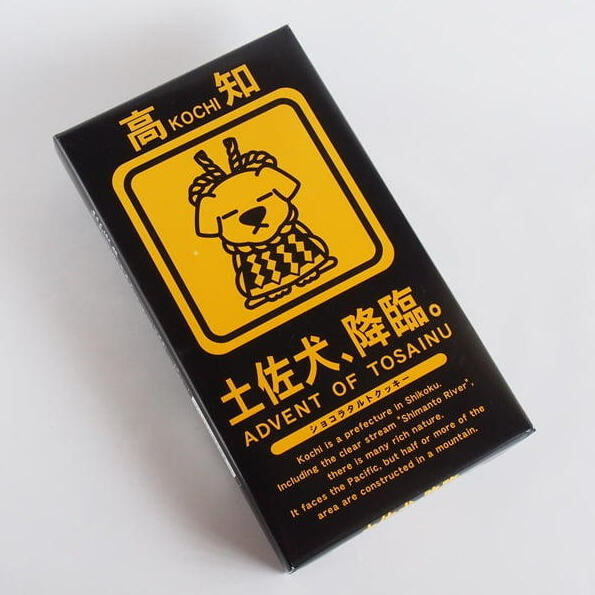
Tosa style Kochi cookies for Yosakoi festival.
Tosa style Kochi cookies for Yosakoi festival.
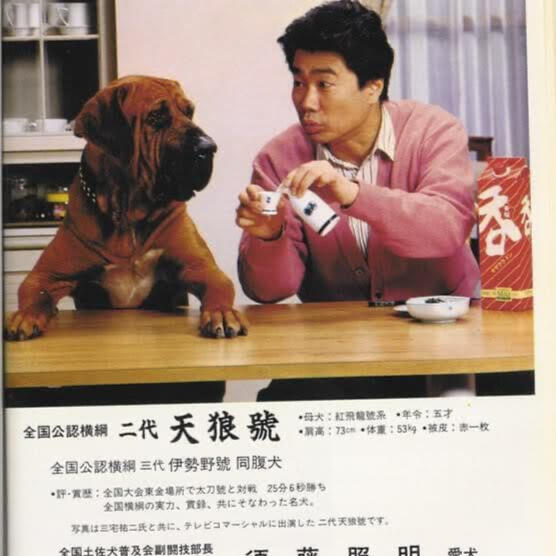
Tosa Inu on the set of a Kizakura Sake commercial with famous actor Yuji Miyake.
Tosa Inu Museum (とさいぬパーク) which featured everything Tosa Inu including a huge Dohyō-iri (土俵入り, ring entering ceremony) where they would bring in an adult Tosa with a Yokozuna Mawashi on. The building permanently closed on May 19 2017.
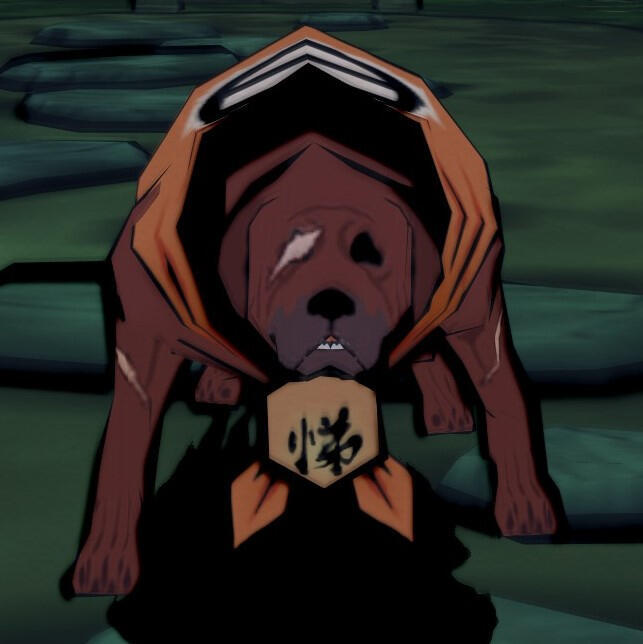
Tei a Tosa dog found in the game Okami HD released by Capcom.


Black

Rokyu-Go

Takeshi-Go (piebald -- 黒白斑-Kuro Shiro Hakuhan)

Kuroshoro-Go

Kosangen-Go


Black and Tan

Godai Shibuya-Go

Kurokin Ho-Go

Yokiro-Go

Meishen Kurokai-Go


Brindle

Yufu Yamato-Go

Kidai Tetsu-Go

Kiyomori-Go

Chidai Tetsu-Go


Countershading

Bushido-Go

Ryugo Ikeda-Go


Cream

Horoizumi-Go

Tatsuko-Go

Shinyamato Ryu-Go


Fawn

Mitsuhiro Ikuma-Go

Takashio-Go


Red

Chunryung-Ho

Tosashi-Go

Tamanegi Taro-Go

Ibuki-Go


Sable

Kanshin-Go

Judai Gun-Go


Tosa Digest Links
file | edit | view | help
folders | < >
-FCI Standard
-UKC Standard
-JKC Standard
-CKC Standard
-Tourism and the decline of fighting dogs By Okuno Hirohisa
-Breed history: JACA
-Tosa Friend Association
-Interview with Enrico Drudi
-South Korean dog fighting study by Lee Seungtack
-Tosa Club of America

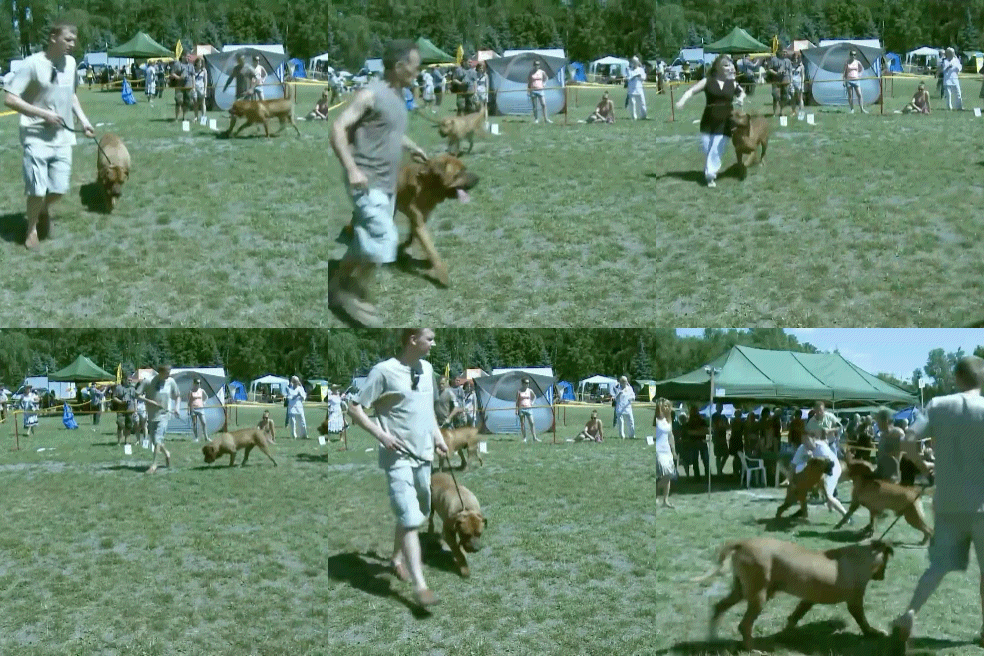
Click picture above for Tosa video page


TOSA

| Title | Author |
|---|---|
| Modern Molosser Interview with Enrico Drudi (Tisama TosaKen) | Denise Flaim |
| Thoo-Kyun and Mee-Kyun Tosa | Ann Kim |
| Interview with Mr. Takashi Hirose | Junior Perozo |
| Interview with Zuzana Birosova and Milan Biros | Unknown |
| Tourism and the decline of fighting dogs | Okuno Hirohisa |
| South Korean dog fighting study | Lee Seungtack |
| Modern Molosser interview with Steve Ostuni | Denise Flaim |
| Sports Illustrated: Silence Reigns When Japans Tosas Fight | Donald Ploski |
| A year for dog lovers | Hisatoki Kuroki |
| AKC: The Pure Japanese-Breed of Dog | Shinzo Kobayashi |
An interview conducted by Mr. H. Perozo with the reputable Mr. Takashi Hirose at the Takurahama Hotel. Mr. Hirose is President of the Tosa Fighting Center in Kochi, Japan. September 2003.
How did your father first come in contact with the Tosa-Ken?
Alter WWII, Takashi’s grandmother used the Tosa as a ranch dog, to guard the cows from thieves which were common because of lack of food alter the war. Mr. Maseru Hirose, Takashi’s father, was raised in a Tosa environment without recognizing the greatness of this animal until adulthood, when he showed interest in the traditional sport of dog fighting. Although Tosa’s have been around since feudal times, it was not until forty years ago, that Mr. Masaru Hirose founded of what is known today as the Tosa Dog Fighting Center, once a dog fighting arena, now a tourist museum dedicated to the preservation of Japanese culture. At this center you can experience all the traditions of the Japanese people, including that of their dedication to the Tosa breed, Kochi traditional dances, replicas and original dog houses, trophies and other significant artifacts related to the Tosa.


Saji-Go, who was exhibited at the 1999 FC I Asia International Dog Show (Kochi Hirose's favorite dog)Document cooperation: Kochi Yamamoto family
What is a Tosa combat like?
They struggle, bite and draw themselves up to their extreme height. One dog is defeated in the fight, when it gives shriek or runs away. They have ranks e.g Yokozuna, Ozeki or Maegashira as well as Ozumo, in accordance to their fighting results.
Can you describe an unforgettable experience with the Tosa breed?
I definitely have a story to tell you. This is something that happened to me during my childhood and it changed my life forever. This one time, the governor of Kochi City, Japan, was visiting the Tosa Fighting Center and my father, Mr. Masuru Hirose wanted to make a good impression by celebrating for the governor a great dog fight. He took Takasi Hirose, Jr. dog, thinking to make the fight emotional and exciting. Unfortunately the results were tragic. Hirose Jr.’s dog was fatally wounded.In relating his story, Hirose, Jr. explains that he is an only child. With no brothers or sisters, the dog became his inseparable companion. On that fatal day, Hirose had said goodbye to his dog, and left happily to school not knowing that he would never see him again. When he returned from school, he looked for his dog, but he was no where to be found. Upon questioning the servants, he was informed that his dog had died in combat earlier that day. For many years he lived in pain and agony over his dog. He would not speak of dogs, dog fights or the likes. When he graduated from college he removed himself totally from the dog environment. Hirose: I’ve never told anyone that story, let alone a stranger from a foreign land! I consider this to be quite personal, he said, with tears in his eyes.
How have your experiences with dog shows been?
First, let me tell you about some unsavory experiences, right here in Japan, my country. I took three of my best Tosa’s to a Japanese Kennel Club show in Tokyo. I wanted the Japanese people to have appositive image of this dog and know it as a docile, cal well-tempered animal. It had been more than 26 years since I last entered a JKC show. There are a lot of influential people in the north side of Japan that don’t wish for others to see the positive, humble side of the Tosa. They are afraid that if the breed is perceived as other than a fighting breed, that another breed will replace it at the shows. These influential people complained to the JKC and demanded that the breed be bared from participating in the show. Shortly after this, Mr. Hirose received a notice informing him that for security reasons, his dogs would not be allowed to compete in the shows. This was a very disappointing because Hirose knows the Tosa as marvelous family oriented animal. But, due to the quantity of high stake investors in this breed, who constantly fight to protect its reputation as a fighting dog, these dogs will be shown only as fighting dogs and it is quite difficult to find it registered with a pedigree belonging to any other club. Can you describe the temperament of the dog?
The Tosa line belonging to my father, produces dogs that are loyal to the family, calm, extremely intelligent, quiet and protector of children. Although there have been rumors saying that a Tosa has bitten an owner or a family member, after thorough investigation these incidences have been considered unfounded. There are many other dogs in Japan that are used for fighting, that are aggressive enough to bite an owner or a stranger, but not the Tosa.
What can you tell me about the two varieties in size and color of today’s Tosa?
Mr Takashi Hirose: In our gallery of Photo Archives at the Tosa Fighting Center we have a photograph of the original small-sized Tosa used for combat, showing one of the various colors of the breed.
The traditional Tosa breeding in Kochi City does not limit the choice in color; they appreciate a variety of color. This is contrary to the breeding requirements of the Japan Kennel Club (JKC) and the Federation Cinologica Internation (FCI). These organizations require one color (red) as defined by the Standards. No other color is acceptable. My father who had an ample vision of the future of the Tosa, not as an ordinary fighting dog, but as a dog to compete in dog shows, favored the color red because this was the color designated acceptable by the JKC and the FCI. However, the Japanese know and like the Tosa and are quite comfortable accepting other colors of the breed. Examples of these can be found at the Tosa Fighting Center Museum.
Well, my father had a lot of concerns about this extraordinary breed and in his dreams he saw the Tosa as a superior animal that, by the way, has become a national treasure and has represented Japan in many international competitions. That is why my father began breeding larger Tosas, from about 150 to 250 pounds, big boned, large head, good tempered, plenty of wrinkles, all according to the standards imposed by the JKC and the FCI.
As with any project, opposition arose against changing or modifying the traditional size of the Tosa, smaller, more resilient in a lengthy fight, more agile in motion. However, my father prevailed and many followers committed themselves to breed larger sized Tosas. Unfortunately, my father’s illness, his efforts diminished and interest in continuing his work suffered. Six years ago the breed was considered extinct, although they still exist. There is a great demand for this large type Tosa, but it is difficult to find a large show quality Tosa. You have been given the privilege to see a Tosa Tournament. You have seen many matches, but none with the quality of Tosas you’ve seen here. Again I say privileged because not many Japanese know this breed or been able to witness a tournament.
This is the true reality of the different sizes of the Tosa. The original that meets al the expectations of a fight and adjust to the original version and the larger version with the expectation of being a show dog, calm, intelligent and in compliance with the standards set by the JKC and CFI.
The same problem occurred with the Akuita. The Japanese version is a medium sized, working dog, hunter of wild boar, while the imported European and American versions are larger, color and size in compliance with dog show and/or mascot standards. His is why we have complained and pressured the JKC into defining the difference. The JKC solved the problem by adding “Japanese” to the name, that way differentiating between the two. So now, there is the Japanese Akita and the Imported Akita.
PS: The information you are reading on our educational web is extra special. It is the first time that a Tosa breeder has been interviewed for public information purposes. We bring you this interview in a sincere effort to provide the very best information, straight from the breeder’s point of view.
Many people are obsessed with obtaining this type of dog, heavy weight size, but if you look the dogs shown in other websites, you can see that most of the dogs reach only about 150 pounds. I haven’t seen one yet to weigh 200 pounds. The large Tosa has been in extinction for six years, finding one is close to impossible, even in Japan. Today the most common Tosa weighs from 100 to 140 pounds.
After thirteen tiring hours of flight from Frankfurt over the entire Asian continent and the Sea of Japan, finally our boing lands on an artificial airport in Osaka. The land of the rising sun greets us with typhoons, rain and heat. Everything is completely different than in our good old Europe, different culture, different thinking and behavior of people, different writing, speech and gestures.
Nippon, as the Japanese call their homeland, is an island nation in the Pacific Ocean made up of more than 6,800 islands, which owe its existence to volcanic activity. It is a beautiful mountainous landscape with many active volcanoes, hot springs, clear rivers, lakes, forests, but also with devastating earthquakes, typhoons and tsunamis.
The mentality and thinking of the Japanese are very different from the so-called Western style, by which the Japanese understand Europe and other continents whose culture derives from the European (America, Australia, partly Africa). While the Western style of thinking is based on logic, expediency and directness, the Japanese style is spiritual, which is reflected in the tea ceremony, martial arts, ikebane, but also in relation to nature, animals and l'uds. The Japanese do not usually train or train dogs, as is the custom in Western civilization, perhaps because they simply do not steal in Japan and thus do not need to use dogs as guardians of property. I had the opportunity to see for myself that the Japanese, unlike us, are not thieves. In the morning I lost my gold ring in the hotel lobby, I only found out in a taxi and I really mourned him. The evening when I returned to the hotel, just for peace of mind, I asked at the reception if they did not find a gold ring with a white eye, wonder the world found and was waiting for me at the reception. But back to the dogs, according to
Japanese springs, dogs in Japan became domesticated at the beginning of the so-called Joumon period, ie about 3000 years BC. The fifth shogun of the Tokugava period, who was an orthodox Buddhist to protect animals and especially dogs, his regulations for the protection of dogs were so extreme that he went down in history as a "dog shogun". The story of a dog's devotion to man is also very popular in Japan. In the 1920s, every night at Shibua, a Tokyo subway station, Hachikou's dog waited for his master to return from work. Ten years after his master died at work, he waited at Hachikou Station for his master. The Japanese so admired the dog's loyalty that after his death, the story became a text in elementary school textbooks, stuffed the dog and placed it in a place of honor at the Tokyo Museum, and erected a brooch statue of the dog in front of Shibuya Subway Station.
Although I am a dog lover in general, but still as the secretary of the Slovakia Moloss Club, I have the closest connection to the Molossos and since Japan is Tosi's country of origin, I tried to get as much information as possible about my breed from my friends. But I have to go back to geography and history.
One of the five major islands stretching from north to south (Hokaido, Honshu, Shikoko, Kyushu, Okinava) is the island of Shikoku, currently the island is administratively divided into 4 prefectures. The southeastern prefecture of the Pacific Ocean is Kochi Prefecture, called TOSA until 1868. Currently, only two cities in this prefecture are called this, the northern city of Tosa and the southeastern port of Tosa. The dog, which we know as TOSA INU, got its name from this area, was bred at a time when the whole prefecture was called Tosa. The second part has no INU meaning after the Japanese dog, but the Japanese never use the Tosa Inu connection. Well means dog in general, if they wanted to say dog Tosa they would use the term Tosa Kan. This breed is simply called the Tosa (the same goes for the Akita), my Japanese friends were extremely surprised when I asked about the Tosa Inu, this connection was made by foreigners who did not know the rules of the Japanese language.
If we want to understand Tosu, we have to understand the philosophy and thinking of the Japanese, which is not easy at all. In short, the history of Japan dates back 3000 years BC. During the period that the Japanese call Joumon, the Shinto religion also originated in Japan during this period, the basic philosophy of which is respect for everything living and non-living in our country. Over the centuries, the Japanese have taken over the culture, script, organization of the state, and customs from China and Korea. From the beginning, Japan was a typical agricultural country with an ancestral arrangement, which united in the 4th century under the leadership of the Yamamoto clan and a typical feudal system was created. The whole period of Japanese history is marked by a constant system. wars between the clans, but also with its neighbors Korea, China and Mongolia. Therefore, in the Japanese history, but also in culture, the militaristic elite stratum of the so-called Samurai who were members of the palace guard. The ethical principles of the samurai were generosity for the weak, contempt for death in battle, physical fitness, and unconditional devotion to the emperor. This ethical principle of samurai is also reflected in the characteristics and character of the Japanese Molosso - Tosa. Despite the fact that the Molossi have a European origin, Tosa is their real descendant, because when it was created, there was a bulldog, mastiff, bullmastiff and later a Bordeaux, the Great Dane. The birth of this breed owes its Japanese passion for games and matches. Sumo wrestling is an ancient popular and revered Japanese Il and sport, their origins are connected with the original I sumo wrestling po is associated with peony agricultural culture, in the very beginning they were ritual pleas for a good harvest and gradually turned into matches. The first professional sumo fighters were in Japan in the "Edo" period around 1600. Sumo is popular in Japan even today, almost every city has a sumo arena, sumo matches are broadcast on television daily and sumo fighters are extremely serious and admired. During the match itself, two "heavy" wrestlers face each other, during the match it is important that the wrestler remains on the ground, the one who touches the ground with another squad falls out. Like people's fights, dog fights have long been popular in Japan, and following the example of sumo wrestling and dog fights, the task was to get the opponent to the ground and hold him there so tightly that he could not get to his feet, while the dogs could not injure each other. A dog that intentionally bit his opponent, showed fear, or did not show fighting spirit was disqualified. Japanese dog fights cannot even be compared in a dream to disgusting bloody fights in the arenas of ancient Rome and today's America. This is probably why dog fights are not banned in Japan and are popular even on the northern island of Hokkaido, which is one of the youngest populated islands in Japan with the originally completely different culture of the Aimé people. During my stay I had the opportunity to meet the breeder of this breed from the town of Ikeda on the island Hokkaido, whose dogs regularly participate in dog fights. Despite the fact that his dogs were not among the worst during the matches, I am convinced that they would not be among the best at our shows (see picture). My Japanese friends explained to me that the best individuals are currently bred around Osaka. The most beautiful Japanese Tosa in 1998 was included in the Japanese catalog
However, let us go back several centuries to the then Tosa Prefecture, where centuries before the Tosa breed, dog fights were held, and indigenous dogs similar to the Japanese Spitz were used for these fights. In 1854, the Tokugava government opened Japan's borders to foreigners, and English dogs came to the islands along with the Euopans, which were significantly heavier than domestic breeds (which meets the requirements of sumo wrestling, the heavier the dog, the harder the opponent can overtake) samurai, so they began to cross the old Japanese skihikoku breed with mastiffs, bullmastiffs, bulldogs, bull terriers and Great Danes. Later, bermardines were also crossed to increase their weight, and the Great Dane was added to increase their militancy. The breeding of modern Tosa dates back to 1848 and its "father" is considered to be Mr. Ohtaka from Tosa Prefecture.
Due to the interest in dog fighting, the breeding of this breed increased extraordinarily until the Second World War, in the thirties of this century, almost 5,000 breeders were engaged in the breeding of Tosa. The years of war, as in other countries in terms of breeding large breeds of dogs in Japan, caused the almost extinction of this breed. Only ten individuals took part in the restoration of breeding after the war. Even today, Tosa is not as widespread in Japan as in the past, despite the fact that its popularity in other countries of the world is growing, not only because of its attractive appearance, but especially because of its nature as a real Japanese samurai. Tosa is a majestic, impressive breed with a robust body structure, strong muscles, deep and wide chest. The FCI standard prescribes only a minimum height, unlike in Japan, where a weight in the range of 80 - 90 kg is also prescribed. Slight wrinkles on her head give her an intelligent expression. Tosa has relatively small ears pointing towards licam, and according to Japanese breeders, the ears represent her dignity. Like most Molos, Tosa is the ideal and effective protector of home,
smart companion and bodyguard. Like the Japanese, their national Moloss is sociable and people-oriented, and as a samurai dog, he has generosity, stoic peace, fitness, and unconditional devotion to his master in his gems.
He brought the first individuals to Slovakia in 1991, Mr. Pichlík, v
At present, 13 breeders of this breed are associated in the Slovakia Moloss Club and 21 individuals have been bred, while almost 100 entries have been made in eight years.
Since Japan has become my second home for at least a short time and I have had the opportunity to get to know and love its inhabitants, I am glad that at least these wonderful dogs can remind me of me here at home.
Goodbye Japan - Sajonára Nippon.


